At Patuxent Architects, we believe great design isn’t just about aesthetics. It’s about transforming how a space feels and functions.
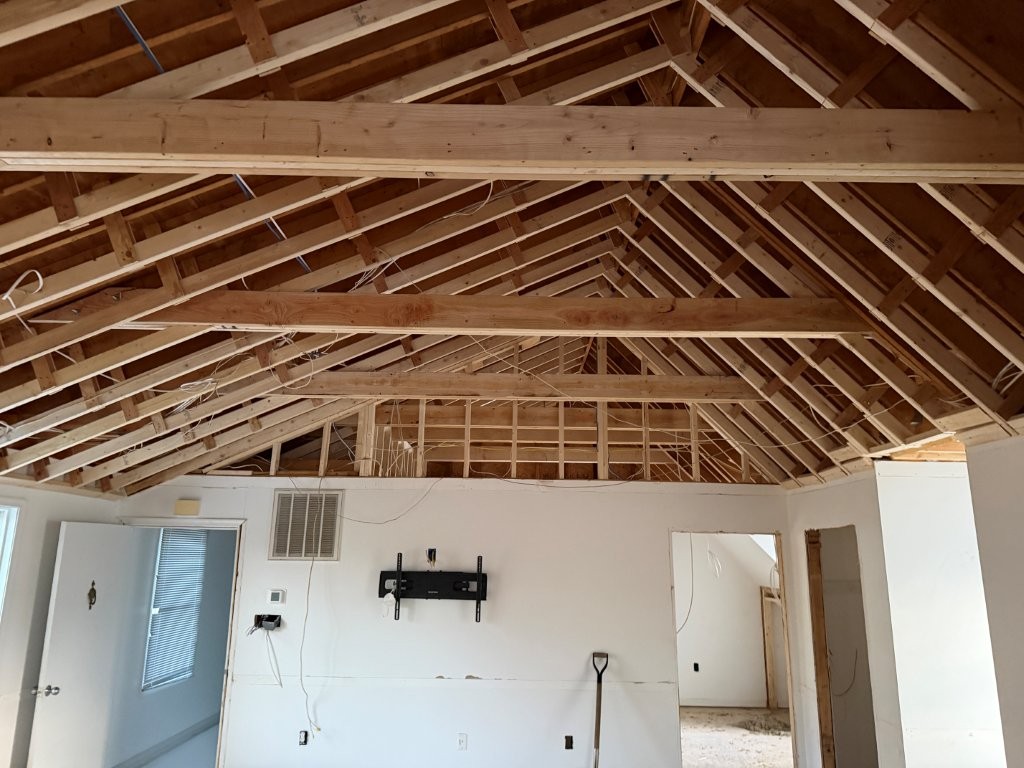
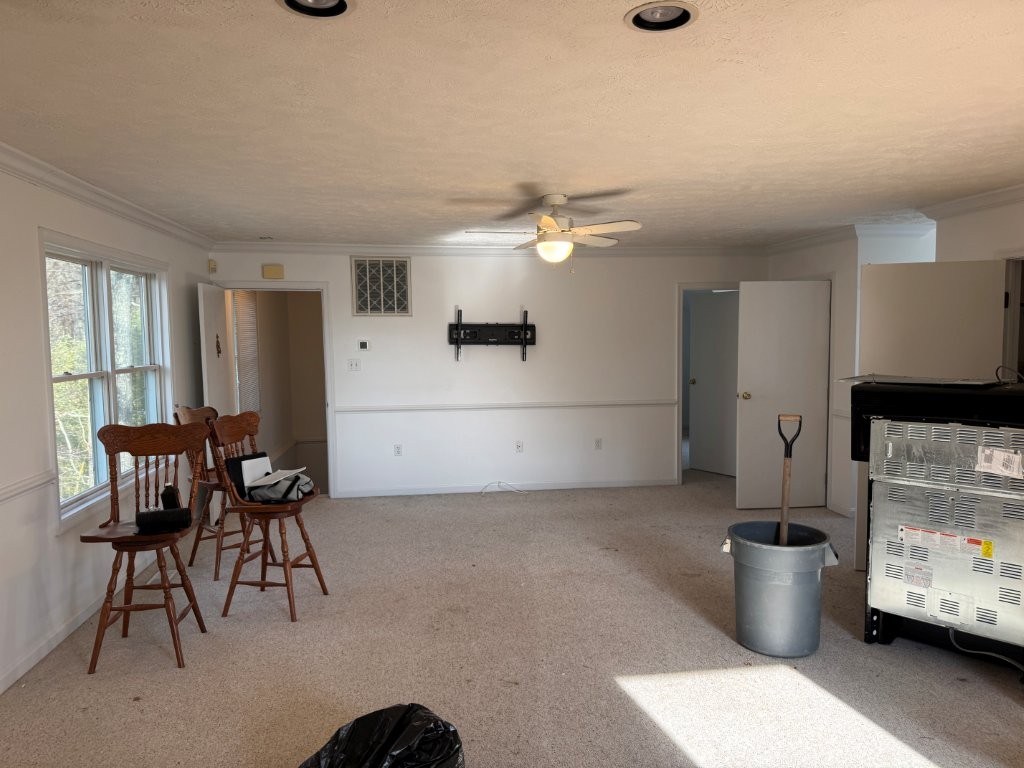
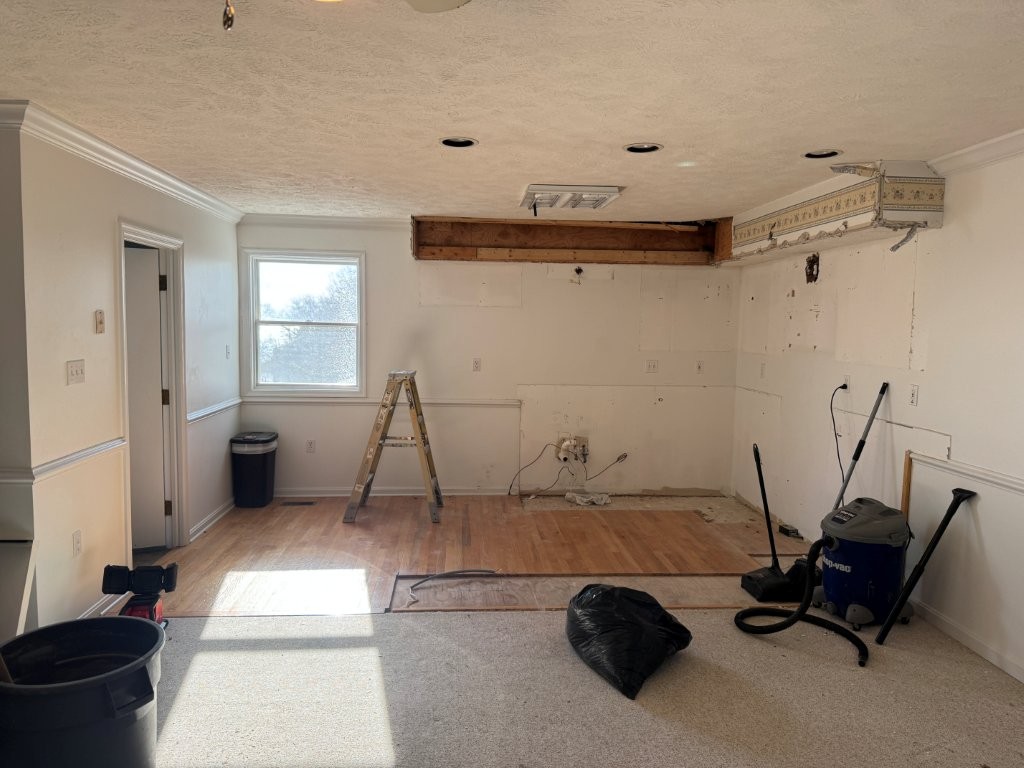
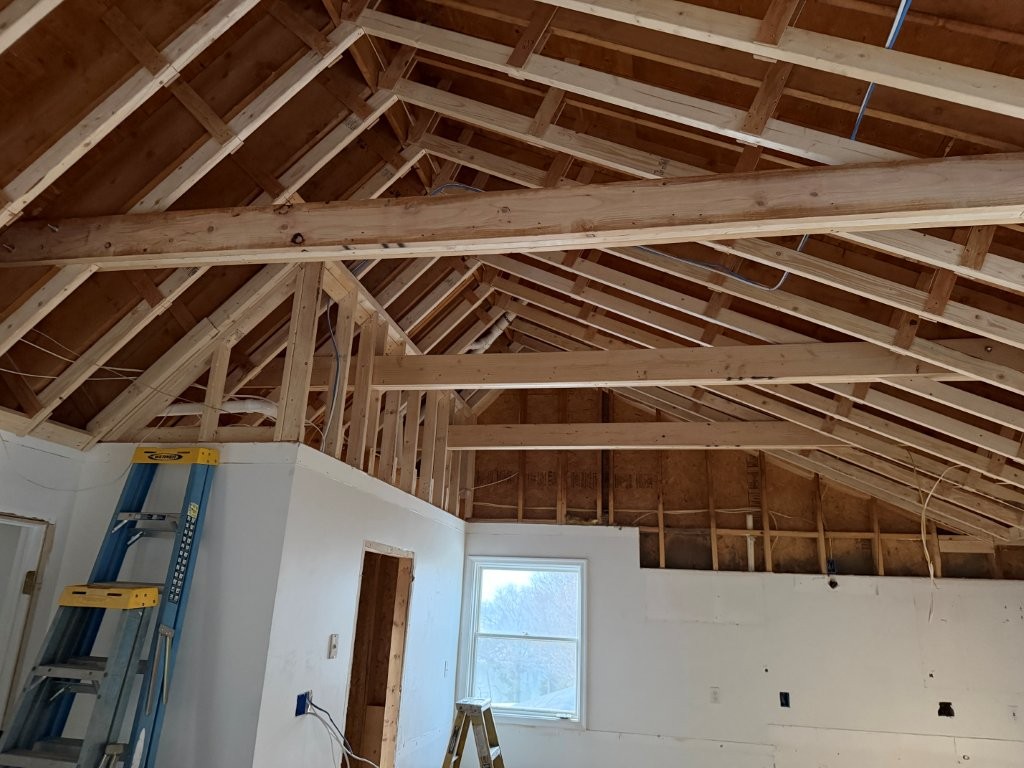
Recently, we had the opportunity to help a homeowner reimagine the accessory dwelling unit (ADU) above their garage. While the apartment was functional, it featured a standard 8-foot ceiling throughout. The homeowner envisioned something more dynamic — a cathedral ceiling above the living and bedroom areas to create greater volume, openness, and architectural character.
The Vision: More Volume, More Light, More Impact
Cathedral ceilings can dramatically change how a room feels. By opening up the ceiling plane, even modest square footage can feel expansive, airy, and inviting.
However, achieving this transformation in an existing structure requires careful structural planning.
The Structural Solution
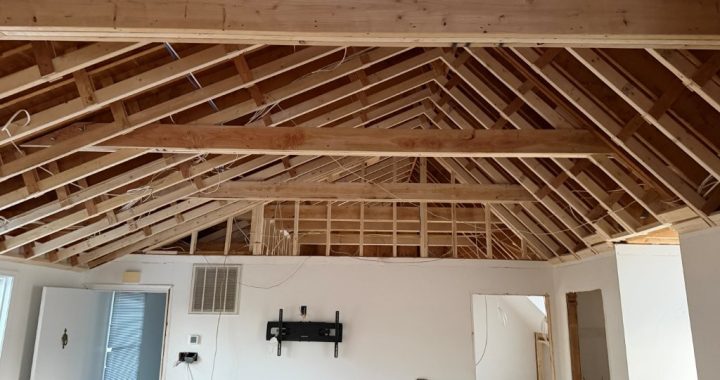
To create the cathedral ceiling safely and effectively, we designed modifications to the existing roof framing system. These modifications included:
- Removing the existing ceiling framing
- Installing new rafter ties to reinforce the roof structure
- Adding new blocking to provide sufficient roof depth for required insulation
Every element was carefully designed to maintain structural integrity while delivering the desired aesthetic transformation.
Our Process: From Concept to Construction
This project is a great example of how we guide clients from initial idea to built reality.
Step 1: Initial Inquiry & Site Visit
The contractor contacted us to ask whether we could design the new ceiling. We scheduled an on-site meeting with the owner to discuss their vision and evaluate the existing conditions.
Step 2: Proposal & Agreement
We prepared a time-and-expense proposal. After review and agreement, we moved forward with the work.
Step 3: Documentation & Modeling
We returned to the site to take photographs and measurements. From there, we created a detailed 3D model of the garage and apartment to fully understand the structure before designing the modifications.
Step 4: Schematic Design
We developed schematic design drawings illustrating the design intent. These included:
- Existing and proposed interior views
- A floor plan showing the proposed rafter tie layout
The drawings were simple yet effective in communicating the vision. After review and discussion, the owner approved the design.
Step 5: Construction Documents
We then prepared detailed construction documents, including:
- Demolition Plan – Identifying what was to be removed and what was to remain
- Floor Plan – Showing the proposed ceiling conditions, collar tie members, spacing, and related notes
- Sections (Three Total)
- Existing conditions and demolition
- Cross-section illustrating final proposed conditions
- Longitudinal section showing the structural modifications
- Detail Drawing – Framing connection detail of the new rafter tie to the existing rafter
These documents allowed the contractor to confidently bid and execute the work.
Step 6: Construction Support & Site Visits
We remained available to answer contractor questions and later visited the site to inspect work in progress.
Timeline Snapshot
- 1 month – From initial contact to accepted proposal
- 1 month – From accepted proposal to completed drawings
- 1 month – From start of construction to current progress
In just three months, this project moved from idea to active construction. Demonstrating how a clear process and strong collaboration between architect, owner, and contractor can keep a project moving efficiently.
The Result
By reworking the roof structure and eliminating the flat 8-foot ceiling, this once-typical apartment is being transformed into a much more dynamic, spacious, and visually compelling living environment.
Projects like this show that meaningful architectural impact doesn’t always require adding square footage — sometimes, it’s about reimagining the space you already have.
If you’re considering remodeling your home or accessory dwelling unit and want to explore what’s possible, we’d love to help.